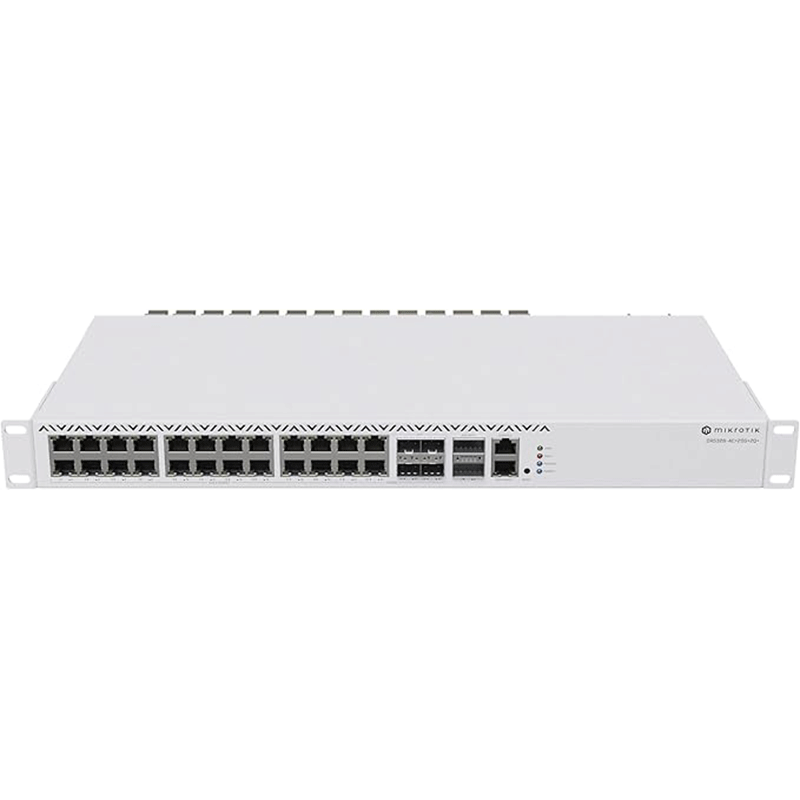
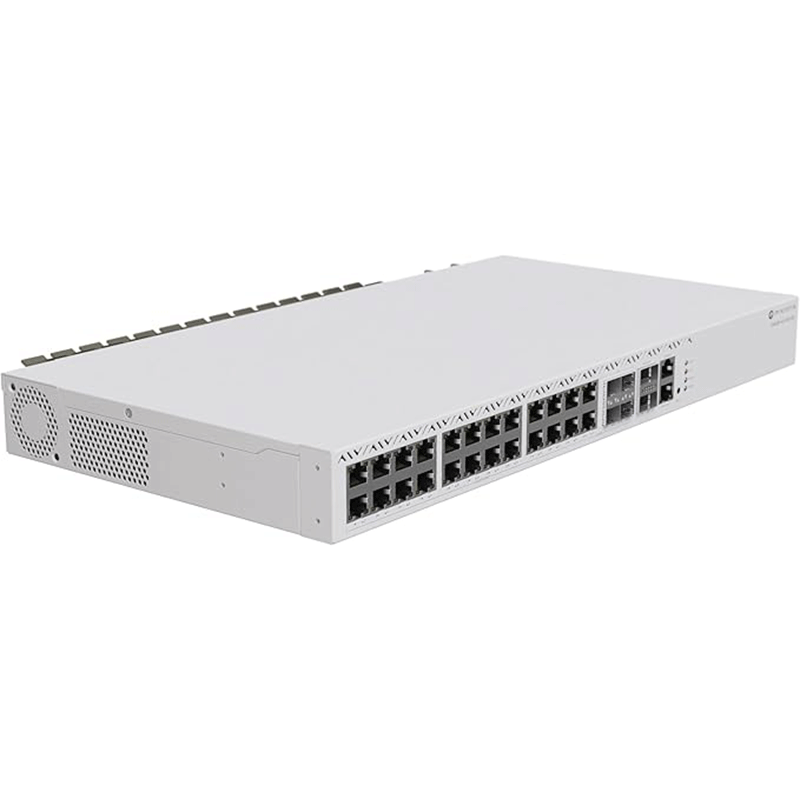
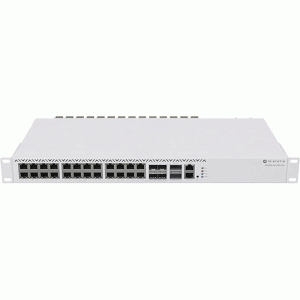
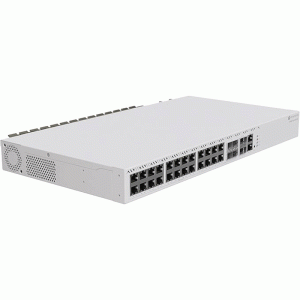
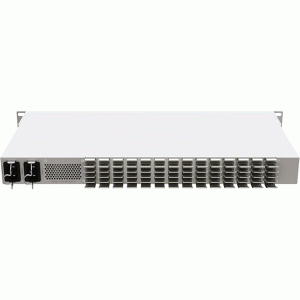
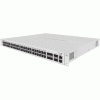
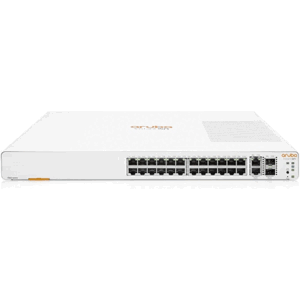
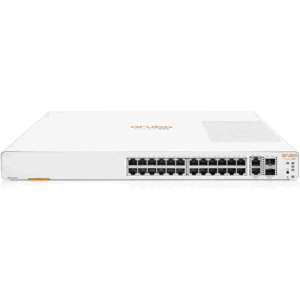
Mikrotik Cloud Router Switch CRS326-4C+20G+2Q+RM with RouterOS v7, 1U rackmount
Description
MikroTik CRS326‑4C+20G+2Q+RM is a managed network switch designed for high‑speed local area networks (LANs) and enterprise environments. It’s part of MikroTik’s Cloud Router Switch (CRS) product line, combining advanced Layer‑2/Layer‑3 networking features with a wide variety of high‑speed ports.
Specifications
General
-
Model: CRS326‑4C+20G+2Q+RM
-
Product code: CRS326‑4C+20G+2Q+RM
-
Series: Cloud Router Switch (CRS)
-
Form factor: 1U rackmount
-
Operating System: RouterOS v7 (License Level 6)
-
CPU: Single‑core QCA9531 @ 650 MHz (MIPSBE)
-
RAM: 128 MB
-
Storage: 32 MB FLASH
-
Switch chip: Marvell 98DX8332
-
MTBF: ~200,000 hours @ 25 °C
-
Operating temperature: −20 °C to +60 °C
Ports & Interfaces
-
Ethernet Ports (RJ45):
-
1 × 10/100 Mbps (management)
-
20 × 2.5 Gbps Ethernet ports
-
-
Combo Ports: 4 × combo ports
-
Each can be 2.5 GbE RJ45 or 10 Gbps SFP+
-
-
High‑Speed Uplinks:
-
2 × 40 Gbps QSFP+ ports
-
-
Serial console: 1 × RJ45
Power & Cooling
-
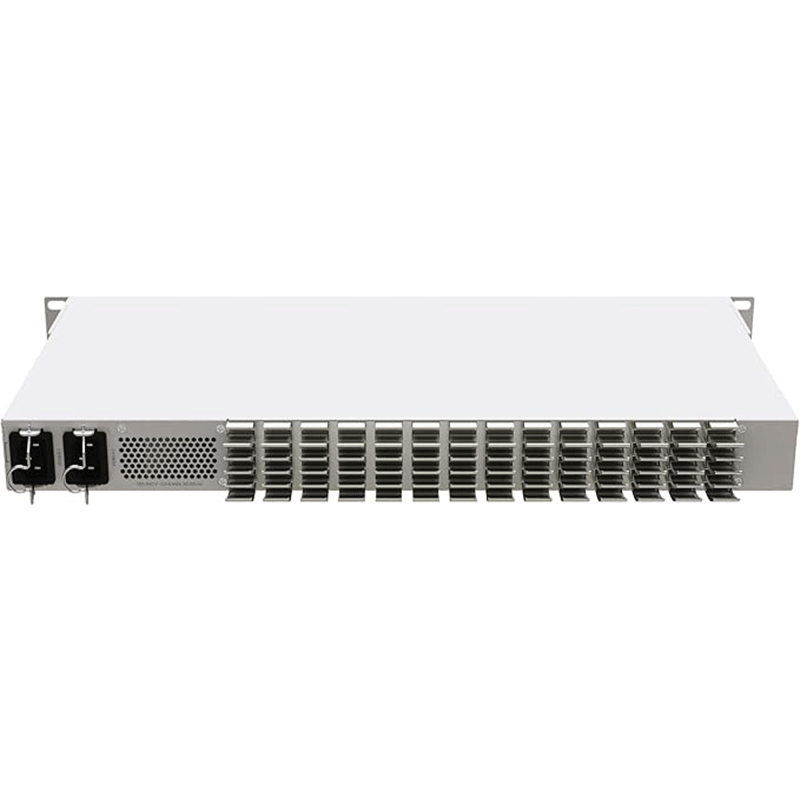
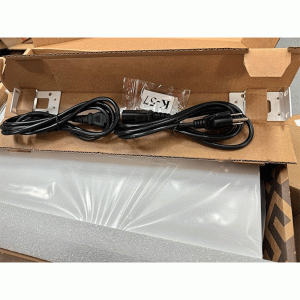
AC Inputs: 2 (redundant)
-
AC Input Range: 100–240 V
-
Max Power Consumption: 70 W
-
Power (no attachments): 51 W
-
Cooling: 2 × fans
Performance & Capabilities
-
Wire‑speed switching with multi‑gigabit throughput.
-
Supports advanced network features like traffic policies and VLAN segmentation.
-
Port aggregation & redundancy options for high reliability
Physical
-
Dimensions: ~443 × 258 × 44 mm
-
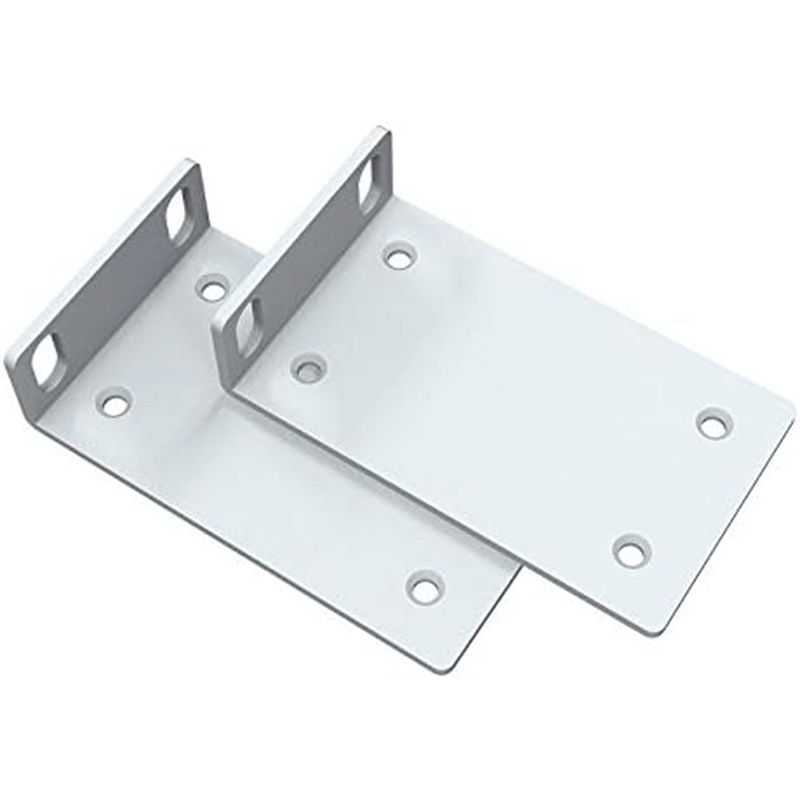
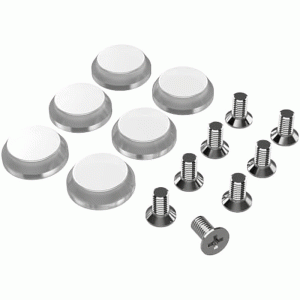
Rackmount: 19″ ears included
-
Chassis: Metal
-
IP Rating: IP20
Other
-
PCB temperature & voltage monitoring: Yes
-
Certifications: CE, EAC, RoHS
Features
1. Multi-Gigabit Ethernet Ports
-
What it has: 20 × 2.5 Gbps RJ45 ports.
-
Why it matters: Most standard network devices connect at 1 Gbps. With 2.5 Gbps ports, this switch allows faster connections without upgrading cabling (Cat5e/Cat6 is enough). Perfect for high-speed office PCs, NAS, or access points.
2. Flexible Combo Ports
-
What it has: 4 ports that can be either 2.5 GbE copper RJ45 or 10 Gbps SFP+ fiber.
-
Why it matters: You can mix copper for nearby devices and fiber for longer links or uplinks. This flexibility is ideal if you need to connect servers, another switch, or a backbone link without buying a separate device.
3. High-Speed QSFP+ Ports
-
What it has: 2 × 40 Gbps QSFP+ ports.
-
Why it matters: These ultra-fast ports are for aggregation or backbone connections, allowing multiple switches or servers to communicate at very high speeds. Ideal in data centers or large LANs with heavy traffic.
4. Managed Switch with RouterOS
-
What it has: Runs RouterOS v7, MikroTik’s advanced network OS.
-
Why it matters: Gives full control over the network, including:
-
VLANs for network segmentation
-
Link aggregation (LACP) for combining ports for higher bandwidth
-
Access control lists (ACLs) for security
-
Traffic monitoring and QoS for prioritizing important data
-
Optional dual-boot with SwOS for simple switch-only management
-
This makes it far more versatile than an unmanaged switch, especially in business networks.
5. Rackmount Design & Redundant Power
-
What it has: 1U metal chassis, dual AC power inputs.
-
Why it matters:
-
Fits standard 19″ racks for professional installation.
-
Redundant power keeps the network running even if one power supply fails, which is critical for offices or servers that can’t afford downtime.
-
6. Active Cooling (Fans)
-
What it has: Built-in fans.
-
Why it matters: Keeps the switch at safe operating temperatures under high traffic loads, ensuring stable performance and longevity.
7. Wire-Speed Switching
-
What it has: Marvell chip with wire-speed throughput.
-
Why it matters: All ports can operate at maximum speed without slowing down, even when multiple devices communicate simultaneously. This is essential for performance-intensive environments like video production, data transfer, or virtualized servers.
8. Advanced Networking Features
-
Jumbo frames: Send larger packets, which reduces CPU load on servers for big data transfers.
-
Port isolation: Keeps devices separated for security or traffic control.
-
Layer-3 routing capabilities: Can perform basic routing between VLANs without an external router.
9. Ideal Use Cases
-
Medium to large office networks needing multi-gigabit connectivity.
-
Data centers or server rooms requiring 10 Gbps or 40 Gbps uplinks.
-
High-bandwidth applications, like video editing studios, NAS storage, or virtualization environments.


Reviews
There are no reviews yet.