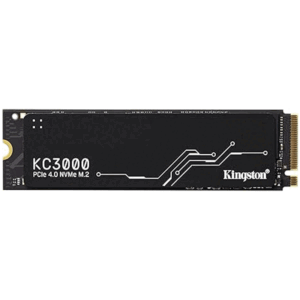
Kingston 2048G KC3000 | PCIe 4.0 NVMe M.2 SSD | SKC300D/2048G
Description
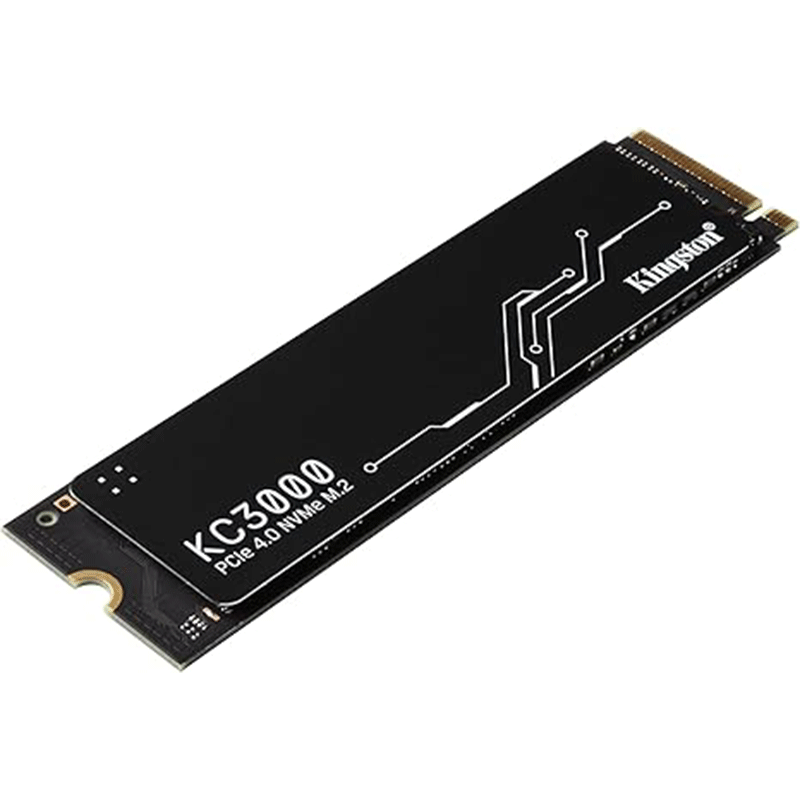
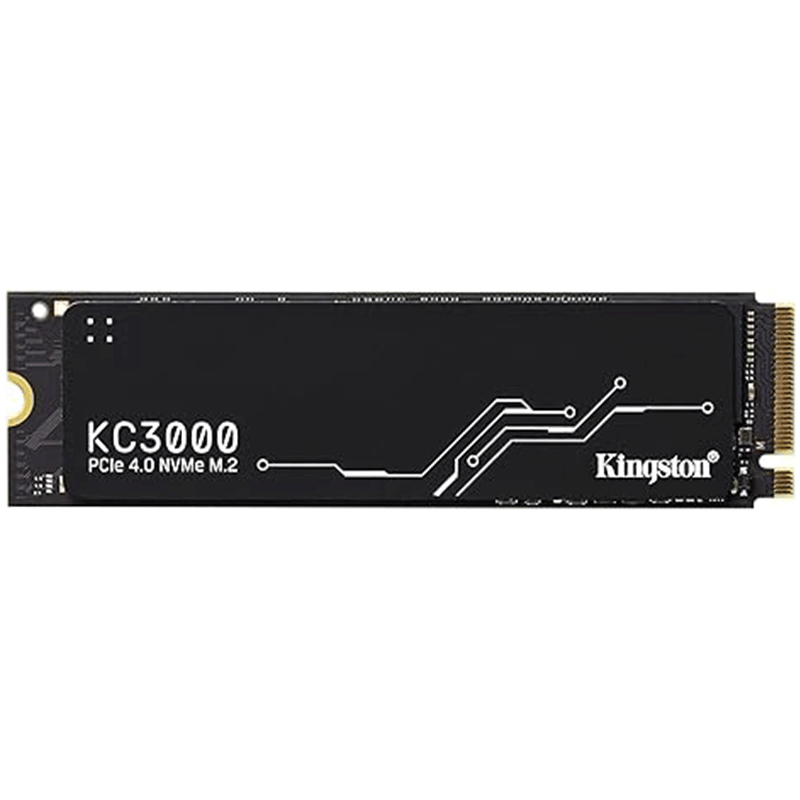
The Kingston KC3000 is an M.2 2280 NVMe SSD using the PCIe 4.0 x4 interface — a high‑performance internal SSD designed for desktops and laptops. It’s a top-tier consumer‑grade NVMe SSD: fast, high-capacity, and robust. “2048G” (or 2 TB) refers to its storage capacity — enough for OS, programs, games, and large media or project files
Specifications
- Sequential Read / Write: Up to 7,000 MB/s read and 7,000 MB/s write.
- Random 4K Read / Write: Up to 1,000,000 IOPS for both read and write.
- Controller & NAND: Uses the Phison E18 controller and 3D TLC NAND.
- DRAM Cache: Yes — improves sustained performance and responsiveness compared to DRAM‑less SSDs.
- Form factor: M.2 2280 (standard size for many desktops/laptops).
- Endurance / Lifespan: Rated at 1.6 PBW (petabytes written) — good longevity for 2 TB usage.
- Operating conditions: Works between 0°C–70°C; storage −40°C–85°C
- Power consumption: Idle ~ 5 mW; active read ~ 2.8 W; write peaks ~ 9.9 W for 2 TB version.
Core Features & What It Offers
- Interface & Protocol — PCIe 4.0 x4 with NVMe: modern high‑speed SSD interface, ideal for maximum throughput.
- Form Factor — M.2 2280: compact standard for desktops and many laptops.
- Controller & NAND — Uses a high‑performance Phison E18 controller + 3D TLC NAND — ensuring fast, reliable flash storage.
- DRAM Cache — Yes (has DRAM cache) — helps sustain high performance and improves responsiveness vs DRAM‑less SSDs.
- Compact + Cooling Design — Comes with a low‑profile graphene‑aluminum heat spreader for thermal dissipation, which helps keep performance stable under heavy workload or sustained data transfers.
- High Storage Capacity — For this model: 2048 GB (2 TB). The series offers capacities from 512 GB up to 4096 GB (4 TB), so there’s flexibility if you need more or less storage.
Use Cases — Who Is This Good For
This SSD is ideal if you:
- Build or upgrade a desktop or gaming PC, and want fast boot times, fast load times, and snappy performance.
- Work with data‑heavy workflows — large video editing, 3D rendering, content creation, virtual machines, software development, etc.
- Need a high‑capacity and high‑endurance drive (2 TB, 1.6 PBW).
- Want to future‑proof against PCIe 4.0 — if your motherboard supports PCIe 4.0 x4, you’ll get maximum speeds.
What to Keep in Mind / Limitations / Requirements
-
To achieve peak speeds (7,000 MB/s), your motherboard / M.2 slot must support PCIe 4.0 x4. On older PCIe 3.0 systems, you will see lower performance.
-
While endurance is good, like all SSDs — total usable lifespan depends on how intensively you write data over time.
-
Thermal management: though it has a heat spreader, in very compact or poorly ventilated cases/laptops, heat buildup might be more likely — good airflow or additional cooling ensures stable performance.


Reviews
There are no reviews yet.