Enterprise Servers
Mobile Workstation
Tower and Rack Workstation Series

DELL EMC PowerEdge Servers

HPE ProLiant Servers

KSh3,620.00
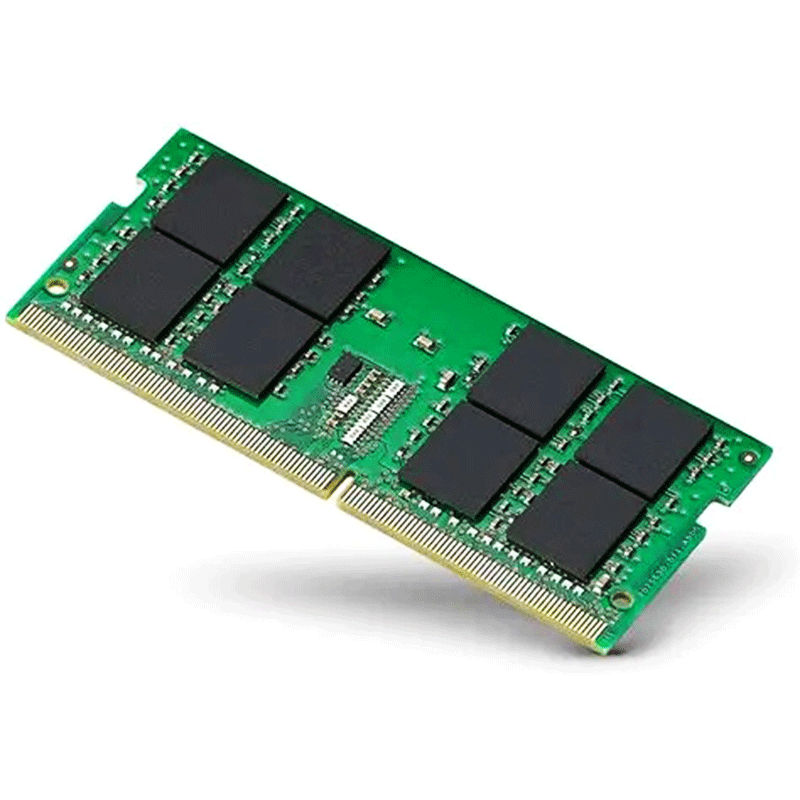
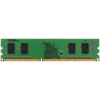
This is an 8 GB DDR5 SODIMM memory module for laptops and compact PCs, running at 4800 MT/s (PC5‑38400) with a CAS latency of CL40. It uses a single‑rank (1R x16), 262‑pin SO‑DIMM design and operates at 1.1 V, making it more power‑efficient than typical DDR4 modules. The module supports On‑Die ECC, is non‑ECC, unbuffered, and built with gold contact fingers for reliable connectivity. It’s a straightforward, industry‑standard memory upgrade — ideal for boosting RAM in compatible laptops or small‑form-factor systems needing a stable 8 GB DDR5 stick.
This RAM module is best suited for someone who:
Your laptop or motherboard must support DDR5 SODIMM 262‑pin — DDR4 or desktop DDR5 modules will not be compatible.
For heavy workloads (e.g. heavy video editing, VMs, large datasets), 8 GB might be limiting — pairing two modules or going for 16 GB+ could be better long‑term.
Because latency is CL40, it’s standard vs. high‑performance DDR5, so one shouldn’t expect enthusiast‑level latency — but for most consumer use‑cases it’s perfectly adequate.
Everyday laptops & general productivity — If you use your laptop for web browsing, document editing, spreadsheets, email, streaming, office apps, etc., this 8 GB DDR5 module provides a smooth, responsive experience and helps avoid slowdowns. Upgrading to DDR5 also yields faster memory bandwidth vs older DDR4 modules.
Multitasking / moderate multitasking workloads — Running multiple browser tabs, background apps (e.g. messaging, cloud sync, antivirus), light photo editing, or general multitasking benefits from extra RAM. The 4800 MT/s speed helps the system juggle memory‑intensive tasks more fluidly.
Laptops with integrated graphics or shared‑memory GPUs — On systems without a dedicated GPU, the system RAM is shared between CPU and GPU. More/faster RAM helps avoid performance bottlenecks when handling graphics, video, or mixed workloads.
Light to moderate gaming / casual gaming laptops — For games that don’t demand lots of RAM (or rely more on GPU), having 8 GB DDR5 helps reduce stutters, speed up loading, and improve overall system responsiveness.
Budget‑conscious users wanting a stable upgrade — If you just want a reliable memory boost without overspending — for example, upgrading an older laptop to keep it usable for everyday tasks — this module offers good value: DDR5 performance, low voltage (1.1 V) for efficiency, and reliable build quality.

Reviews
There are no reviews yet.