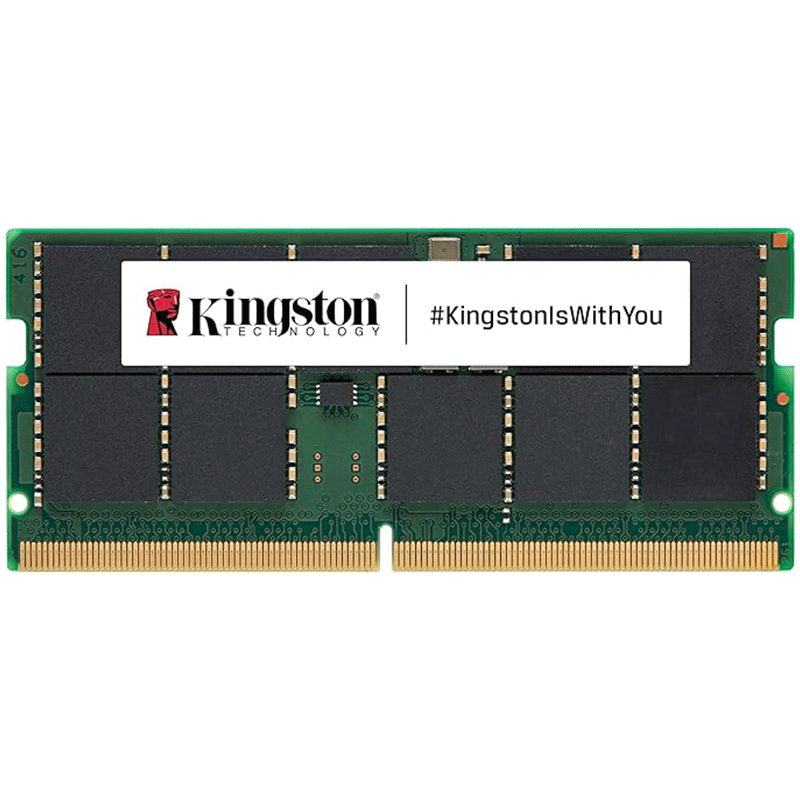
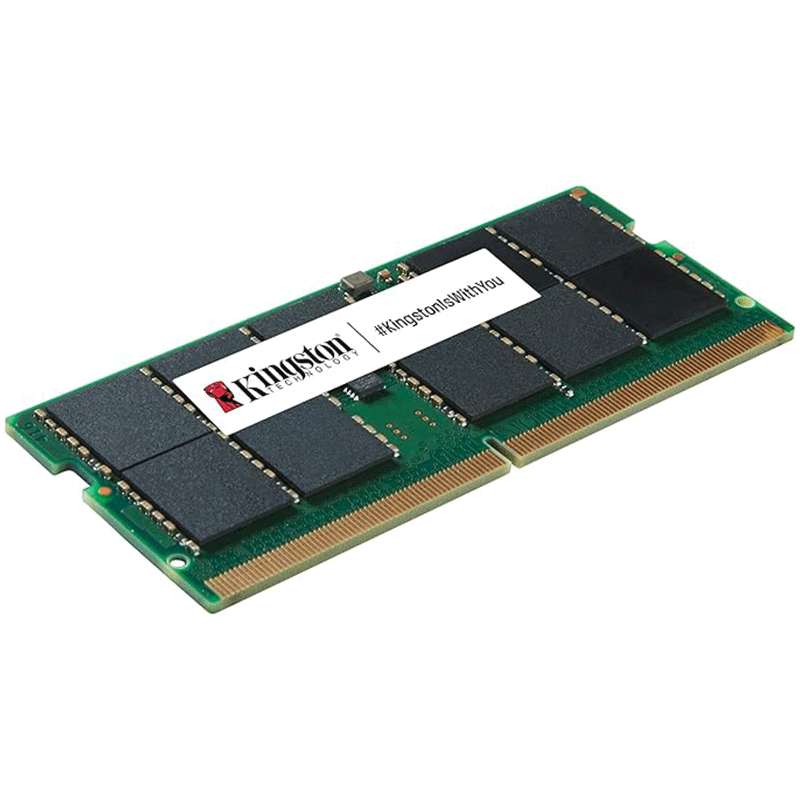
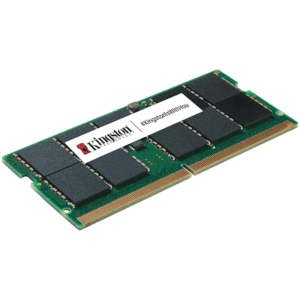
Kingston Branded Memory 32GB DDR5 4800MT/s ECC Reg 2Rx8 Module KTD-PE548D8-32G Server Memory
Description
Kingston KTD‑PE548D8‑32G is a 32 GB DDR5 SDRAM module (288‑pin DIMM) designed for servers and workstations. It runs at 4800 MT/s (PC5‑38400), uses ECC (Error‑Correcting Code) for data integrity, and is Registered (RDIMM) — meaning it is buffered for stability when many modules are used. Its dual‑rank (2R×8) organization and CL40 latency make it a reliable, high‑capacity memory module optimized for enterprise‑grade workloads.
Specifications
- Type: DDR5 SDRAM
- Capacity: 32 GB (1 × 32 GB)
- Speed / Data Rate: 4800 MT/s (PC5‑38400)
- Form Factor: 288‑pin DIMM
- Memory Features: ECC (Error‑Correcting Code), Registered (RDIMM), Dual‑Rank (2R ×8)
- CAS Latency: CL40
- Voltage: 1.10 V typical
- Intended Use: Server / workstation motherboards that support ECC + Registered RAM.
- Operating Temperature Range: 0 °C to 85 °C
- Non‑Operating (Storage) Temperature: –55 °C to 100 °C
- Module Weight: ~0.05 kg
- Pins / Contacts: Gold‑fingers, 288‑pin DIMM interface
Key Features
- Up to 4800 MHz speed with CL40 latency for playing the latest games and using heavy software
- 32 GB of memory can produce approx. 10K MIPS and as a result, your system gets more room to run complex apps.
- DDR5 SDRAM memory technology effectively enables data to be moved at various points in a CPU clock cycle to allow maximum productivity
- RAM Module offers better protection with maximum efficiency and convenience
- Workstation device support for your ram module to allow maximum efficiency and dependability
- Unbuffered signal processing provides reliable optimization for your required applications to allow maximum usability
- CL40 CAS latency for quicker access to the required location in a timely efficient manner
- 288-pin for optimal performance and maximum reliability
- DIMM form factor with 288-pin and 32 GB memory size for enhanced performance and speed to allow maximum usability
what it’s good for
-
Server / Enterprise use: Because it’s ECC + Registered, this module is suited for servers, workstations, or any system where data integrity and stability are critical (databases, virtualization, critical storage, etc.). ECC helps detect/correct memory errors, and Registered DIMMs put less electrical load on the memory controller — which helps when there are many DIMMs installed.
-
High‑performance DDR5: DDR5 at 4800 MT/s gives you a good baseline memory bandwidth — useful for applications that need fast memory throughput: virtualization, data processing, caching, large‑scale compute, etc.
-
Future‑proof / higher‑capacity builds: 32 GB per module gives you room to scale (e.g. several modules → large memory pools). Good for enterprise workloads rather than light desktop/tower tasks.
-
Reduced power/heat: Operating at 1.1 V helps reduce power consumption and heat vs older memory types — beneficial in dense server racks.
When this RAM module makes sense
- Servers and production workloads needing high reliability / stability
- Because it’s ECC + Registered, the module can detect and correct memory‑bit errors — reducing risk of data corruption or crashes under heavy workloads.
- The registered/buffered design improves signal integrity when using multiple memory modules, which is important in multi‑DIMM server configurations.
- Data‑intensive & memory‑heavy applications
- If you run virtualization hosts, databases, in‑memory caching, large datasets, or high‑performance computing tasks: the 32 GB capacity + 4800 MT/s DDR5 speed gives good bandwidth and capacity headroom.
- For systems that need to support many simultaneous users, processes or VMs — having ECC & RDIMM helps maintain stability under load.
- Workstations or servers expected to run 24/7 (always‑on environments)
- Because ECC + registered memory minimize the chance of data errors over long runtimes, it’s ideal for systems that must run continuously (e.g. file servers, enterprise servers, infrastructure machines).
- The lower operating voltage (1.1 V) improves power efficiency and reduces heat — beneficial in dense server racks or energy‑sensitive setups.
- Systems needing large total RAM capacity
- The 32 GB per module size + dual‑rank, registered design scales well. Using multiple modules you can build up substantial RAM pools — good for virtualization, heavy workloads, caching, or large‑scale data processing.
When it’s not ideal / less‑suited
-
Desktop PCs or typical consumer workstations that don’t support ECC / Registered RAM — they likely require unbuffered, non‑ECC RAM. Using ECC‑registered modules in unsupported systems can fail or cause instability.
-
Light or everyday tasks — if you’re only doing web browsing, office work, or casual use, the benefit of ECC + high capacity is minimal compared to cost.
-
Mixed‑memory builds (e.g. mixing registered & unbuffered modules) — that can cause incompatibility or system failure.
⚠️ What to check / potential caveats
-
Compatibility: Because it’s ECC + Registered, it will only work if your motherboard/server supports RDIMM DDR5 ECC. Most consumer‑grade desktops and motherboards expect unbuffered, non‑ECC memory — so this module may not work there.
-
Mixing modules: If you mix different types of RAM (non‑ECC, unbuffered, UDIMM vs RDIMM), you risk instability or non‑boot. It’s best to match all memory to same type if using ECC‑registered.
-
Use case suitability: For a normal desktop or laptop — this module is likely overkill or incompatible. It’s really aimed at servers or workstations.
-
Cost vs benefit: ECC RDIMM tends to be more expensive per GB compared to standard desktop DDR5 memory. The benefit shows up in reliability, not necessarily raw speed/performance for everyday desktop tasks.


Reviews
There are no reviews yet.