


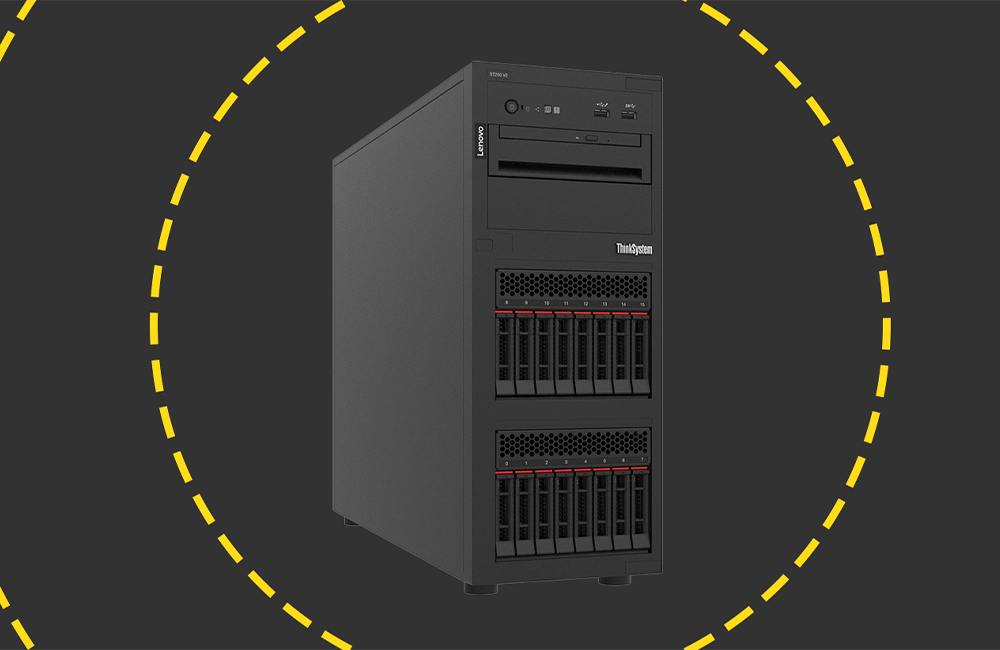


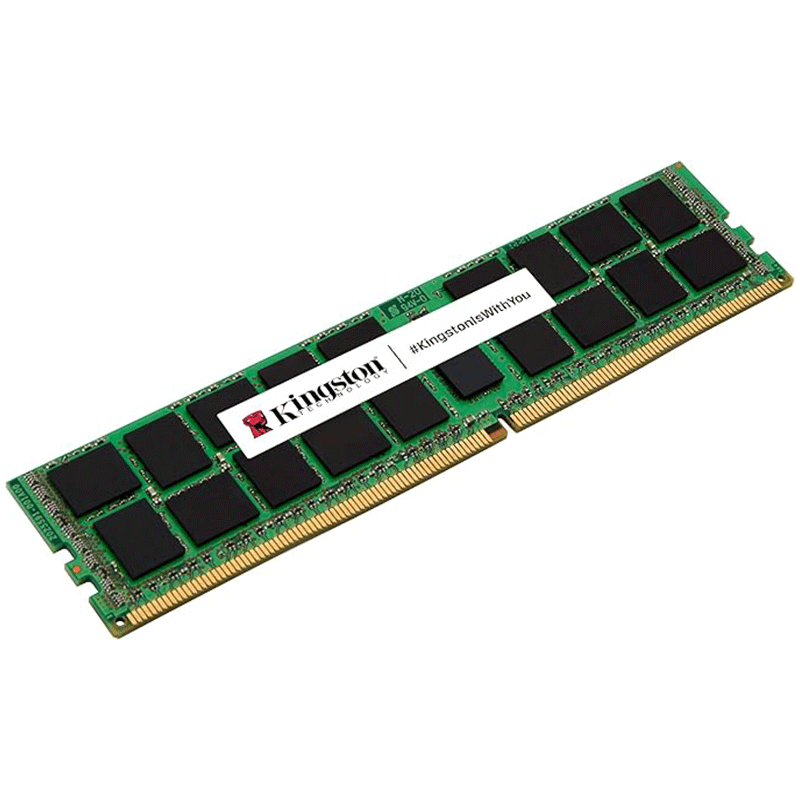

A 16 GB DDR5 ECC UDIMM designed for servers and workstations. Runs at 4800 MT/s (PC5‑38400) with CAS latency CL40, uses a 288‑pin DIMM form factor, and operates at 1.1 V. The built‑in ECC (Error‑Correcting Code) helps detect and correct memory errors, offering improved stability and reliability — ideal for data‑critical workloads or enterprise systems.
Key Specifications & Features
- Capacity: 16 GB (1 × 16 GB module)
- Memory type: DDR5 ECC SDRAM — modern DDR5 standard with error‑correction support
- Speed / Data rate: 4800 MT/s (PC5‑38400) — good bandwidth for server / workstation tasks
- Form factor: 288‑pin DIMM (desktop/server‑style module)
- CAS latency: CL40 — the delay between memory request and data availability under normal conditions
- Voltage: 1.1 V — lower power consumption and less heat compared with older/higher-voltage memory types
- ECC (Error‑Correcting Code): Yes — provides error detection and correction, improving data integrity and system stability (important for servers/workstations)
- Rank and buffering: Single‑rank, unbuffered (UDIMM) — typical for ECC server‑class or workstation RAM modules rather than registered/buffered RDIMMs.
Key Advantages
-
Error detection & correction → improved data integrity
Because the module supports ECC (Error‑Correcting Code), it can automatically detect and correct single‑bit memory errors — and detect (though not always correct) multi‑bit errors. This helps prevent silent data corruption. -
Greater system stability and reliability
ECC memory significantly reduces the risk of crashes, freezes, or data corruption caused by memory errors — which is especially important for servers, workstations, or any system doing heavy or continuous workloads. -
Better protection against “soft errors” and external disturbances
ECC helps guard against soft errors caused by environmental factors (like cosmic rays, electromagnetic interference, etc.) — errors which non‑ECC RAM cannot catch reliably. -
Enhanced suitability for critical workloads and data‑sensitive applications
For applications where accuracy matters (databases, financial computing, scientific simulations, virtual machines, enterprise services, etc.), ECC RAM gives an added layer of safety that helps avoid subtle memory‑related failures. -
Improved uptime and reduced downtime risk
By catching and correcting errors on the fly, ECC memory helps systems run longer without failure or the need for reboots — a major plus for always‑on servers or enterprise environments.








Reviews
There are no reviews yet.