KTD-PE432E/32G Kingston 32GB PC4-25600 DDR4-3200MHz ECC Unbuffered CL22 288-Pin DIMM 1.2V Dual Rank Memory Module
Description
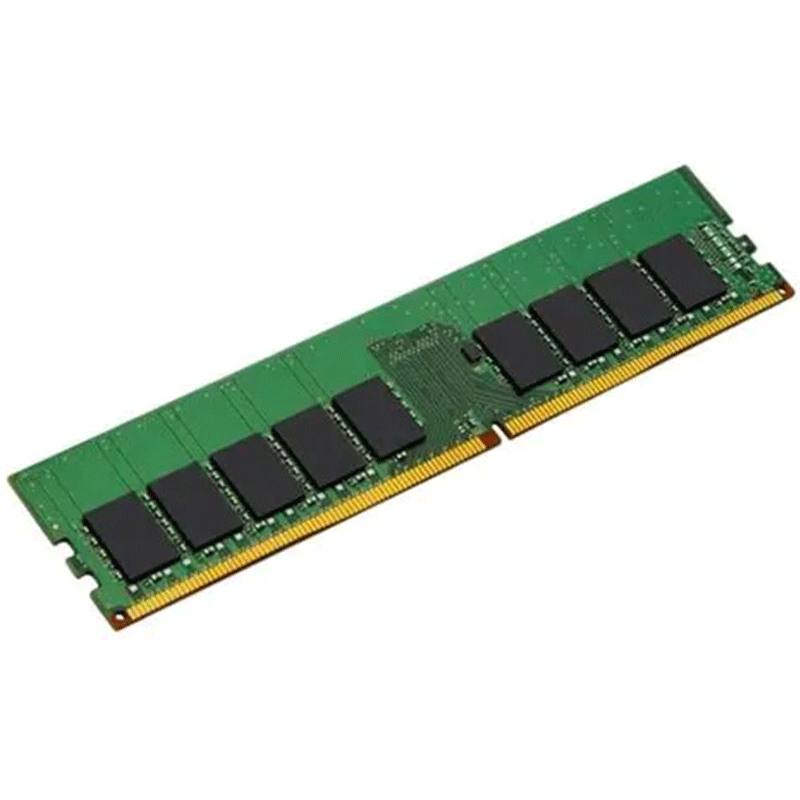
The Kingston KTD-PE432E/32G is a 32GB DDR4-3200 (PC4-25600) ECC Unbuffered (UDIMM) memory module designed for high-reliability systems. It features ECC error correction, dual-rank architecture, CL22 latency, and operates at 1.2V, offering stable, efficient performance for workstations and servers that require dependable memory integrity.
Specifications
- Type: DDR4 SDRAM, ECC Unbuffered, 288‑pin DIMM
- Capacity: 32 GB (single module)
- Speed / Standard: 3200 MHz (PC4‑25600)
- CAS Latency: CL22
- Voltage: 1.20 V
- ank / Organization: Dual‑rank (2R), x72 (ECC) data width
- Form Factor: 288‑pin DIMM (standard desktop/server memory module)
- Error Checking: ECC (Error Correcting Code) — improves memory reliability and data integrity
- Buffer/Registration: Unbuffered / Unregistered (UDIMM)
- Intended Use: Servers / Workstations / Systems needing ECC reliability
Features
- 32 GB capacity — a single 32 GB module, giving plenty of memory for servers, workstations or memory-intensive workloads.
- DDR4-3200 / PC4-25600 — high-speed DDR4-3200 memory standard, suitable for modern DDR4-ready motherboards.
- ECC (Error-Correcting Code) — supports ECC, which helps detect and correct single-bit memory errors and improves system reliability/stability.
- Unbuffered (UDIMM) — unregistered/unbuffered design, making it compatible with many workstations and server/motherboards that accept ECC UDIMM.
- Dual-Rank (2R, 2Rx8 / x72) — dual-rank configuration which can improve memory throughput and better than single-rank in certain workloads.
- 288-Pin DIMM form factor — standard full-size desktop/server DIMM module, fits standard DDR4 DIMM slots.
- CAS Latency CL22 — reasonably low latency for a high-capacity ECC module, balancing capacity, speed and stability.
- 1.20 V operating voltage — standard DDR4 voltage, enabling efficient power consumption and compatibility.
- Suitable for servers / workstations / memory-intensive tasks — because of ECC, large capacity and dual-rank design, it’s ideal for systems needing reliability and performance under load (e.g. servers, virtualization, heavy data tasks).
- Wide temperature tolerance & robust build — operates in a typical module temperature range (0 °C to 85 °C) and meets standard DDR4/ECC module mechanical & electrical design specs.
Ideal Use Cases
1. Workstations Requiring High Reliability: ECC helps prevent crashes and data corruption in long-running jobs.
Because this module supports ECC (Error-Correcting Code) and is unbuffered, it is perfect for professional workstation systems where stability matters, such as:
- CAD / CAM software (SolidWorks, AutoCAD, Fusion 360)
- 3D rendering & modeling (Blender, Maya, 3ds Max)
- Scientific and engineering software
- AI/ML development environments that run long, memory-intensive training jobs
2. Small Business or Entry-Level Servers: ECC reduces memory-related downtime, which is essential in server scenarios.
A primary use case for ECC UDIMM is server environments that require:
- File servers
- Domain controllers
- Database servers (MySQL, PostgreSQL, MSSQL)
- NAS units (if the motherboard supports ECC UDIMM)
- Small virtualization hosts (e.g., Proxmox, VMware ESXi, Hyper-V)
3. Virtualization Hosts (VMs & Containers): Dual-rank modules often perform better in multi-VM memory operationsWith 32GB per module, this RAM is excellent for:
- Homelab virtualization (Proxmox, ESXi, XCP-NG)
- Running multiple VMs simultaneously
- Docker/Kubernetes node setups
4. Professional Data-Integrity Workloads
Systems that manipulate or store sensitive data benefit strongly from ECC memory:
- Financial analysis & modeling
- Medical data processing
- Scientific computing
- Government or legal data management
5. Heavy Multitasking or Memory-Intensive Software: this 32GB ECC module ensures smooth, stable performance.
If you run:
- Large datasets
- Multiple browsers with numerous tabs
- Software development environments (VS Code + Docker + Databases)
- Virtual machines + native apps simultaneously
6. Workstations Used for Long Uptime
ECC RAM is ideal for systems that:
- Stay powered on 24/7
- Perform background tasks continuously
- Need maximum uptime with minimal crashes or memory faults
Examples:
- Home servers
- Rendering farms
- Backup servers
- Compute nodes
7. ECC-Supported Desktop Systems (Selective Models): If your system supports ECC UDIMM, this module provides workstation-grade reliability.
Some CPUs/motherboards support ECC UDIMM but operate as normal desktops, such as:
- AMD Ryzen (many models support ECC, depending on motherboard)
- AMD PRO series
- Intel Xeon E-series
- Intel Core processors on select workstation-class motherboards
🚫 Not Ideal For
-
Gaming PCs (ECC UDIMM generally offers no gaming advantage)
-
Systems requiring RDIMM or LRDIMM (incompatible)
-
Ultra-compact systems that only use SODIMM
-
High-frequency overclocking setups (ECC modules are built for stability, not overclocking)


Reviews
There are no reviews yet.