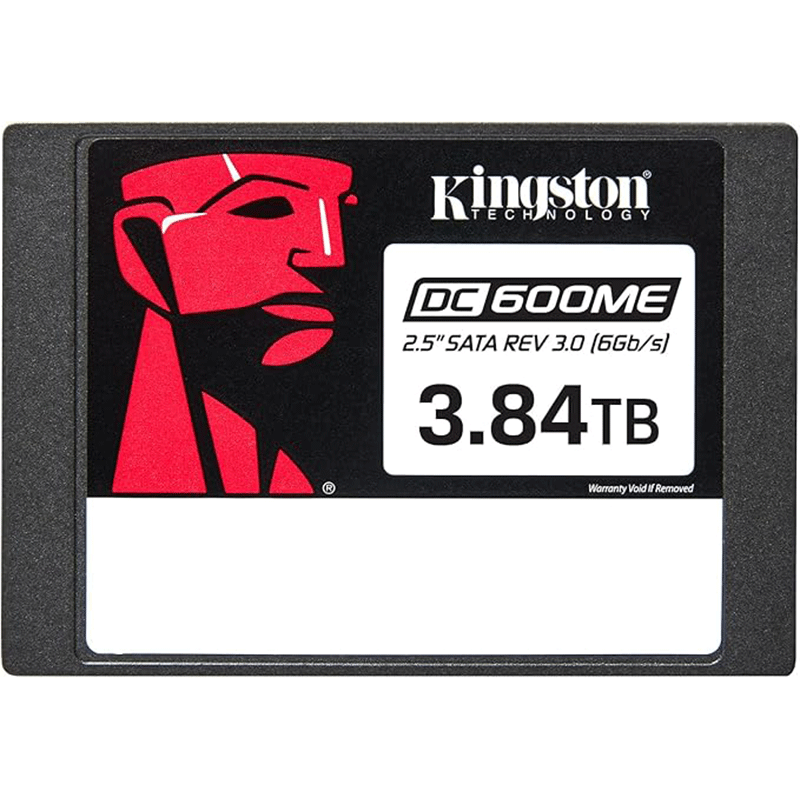
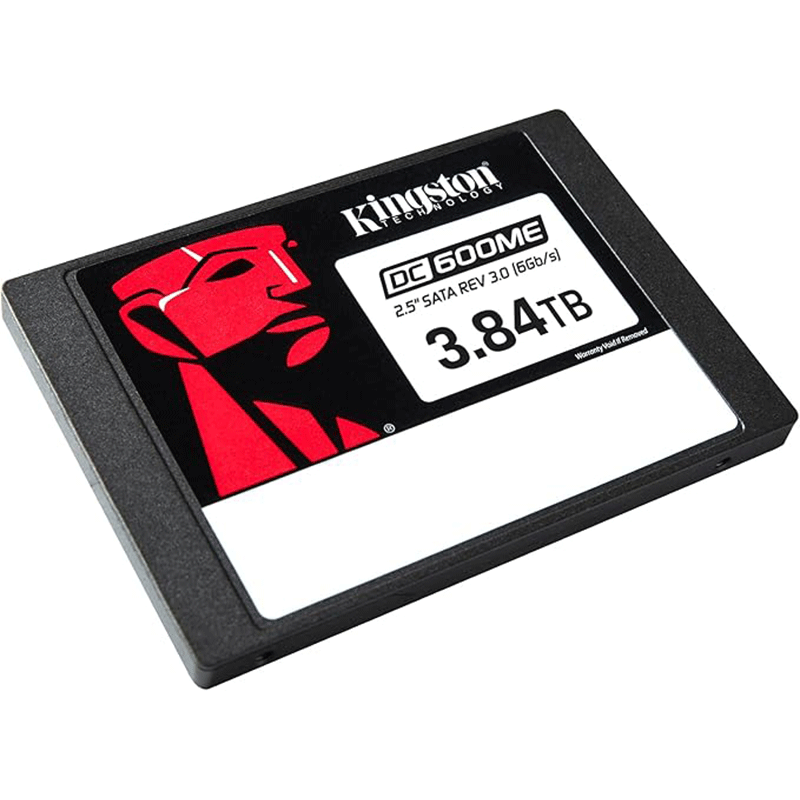
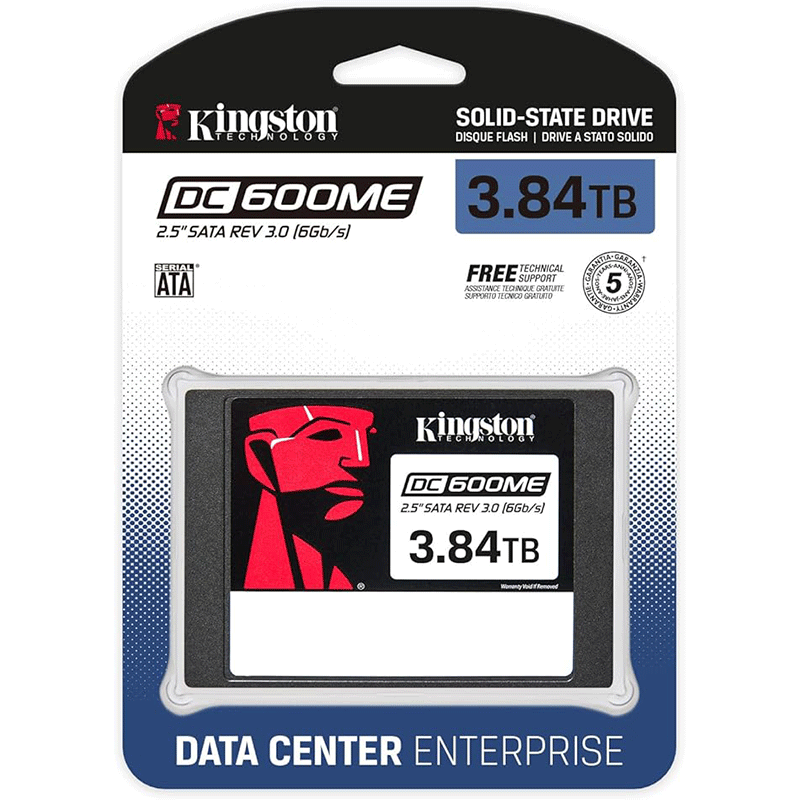
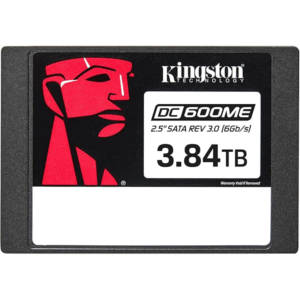
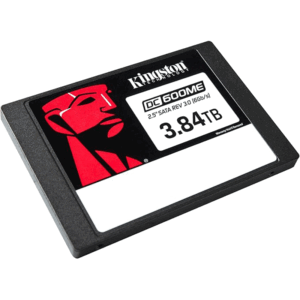
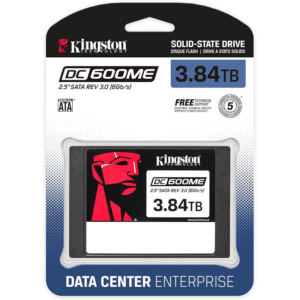
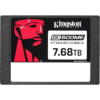
Kingston Enterprise 3840G DC600ME (Mixed-Use) | TCG Opal 2.5″ SATA SSD | SEDC600ME/3840G
Description Overview
Enterprise‑grade 2.5″ SATA SSD (SATA III, 6 Gb/s) with 3.84 TB capacity, designed for mixed‑use server/data‑center workloads. It uses 3D TLC NAND, delivers up to ~560 MB/s sequential read and ~530 MB/s write, and provides ~94,000 IOPS random read / ~59,000 IOPS random write. The drive features hardware‑based power‑loss protection (PLP) via hold‑up capacitors, ensures consistent latency/IOPS for reliable performance, and supports AES 256‑bit encryption with the TCG Opal 2.0 standard for secure data storage. It’s optimized for server, RAID, virtualization or cloud storage environments where performance, reliability, and security matter.
Specifications
- Capacity: 3.84 TB
- Form factor: 2.5″
- Interface: SATA Rev. 3.0 (6 Gb/s), backward-compatible to SATA 3 Gb/s
- NAND type: 3D TLC + DRAM cache
- Encryption / Security: AES 256‑bit hardware encryption; supports TCG Opal 2.0 (since model is “ME”)
- Power-loss protection (on-board capacitors / PLP)
- Device type: Internal SSD — enterprise / data‑center / server use
- Sequential read up to: 560 MB/s , write up to: 530 MB/s
- Random 4 KB read: up to 94,000 IOPS, 4 KB write: up to 59,000 IOPS
- Latency (steady‑state / typical): read < 130 µs, write < 70 µ
- Endurance: 1 DWPD (Drive‑Writes‑Per‑Day) for 5 years
- TBW (Terabytes Written): 7008 TBW over life
- MTBF (Mean Time Between Failures): 2,000,000 hours
- Features: Wear‑levelling (static & dynamic), SMART health monitoring, hot‑plug capable
- Power consumption (Idle): ~1.30 W, Power consumption (Active/Average): ~1.45 W
- Max power (Read): ~1.6 W; (Write): ~3.6 W
- Vibration tolerance: Operating 2.17 g (7–800 Hz), Non‑operating 20 g (10–2000 Hz)
- Operating temperature: 0 °C to +70 °C; storage temperature: –40 °C to +85 °C
Features
- 3.84 TB capacity — ample enterprise‑class storage for servers, storage arrays, virtualization hosts, etc.
- 2.5″ form factor, SATA III (6 Gb/s) interface — compatible with standard SATA bays.
- 3D TLC NAND + DRAM cache — providing a balance of performance, capacity, and reliability.
- Sequential read up to ~560 MB/s, sequential write up to ~530 MB/s — good throughput for bulk data moves.
- Random 4 KB IOPS: ~94,000 read / ~59,000 write — solid I/O for mixed workloads and many small‑file operations.
- Low and consistent latency and IOPS — designed for stable performance under load (important in server/data‑center environments).
- Hardware‑based power‑loss protection (PLP) — built-in capacitors to protect data integrity if power is lost unexpectedly.
- AES 256‑bit hardware encryption + support for TCG Opal 2.0 (with “ME” version) — useful if you need to secure stored data in multi‑tenant or sensitive environments.
- Enterprise-grade reliability: ~2,000,000 hours MTBF and high endurance rating (TBW), making it suitable for continuous server use.
- Optimized for “mixed-use” workloads — a balance between read and write activity (not just archival or write‑intensive) — ideal for general purpose enterprise storage, virtualization, database, RAID.
Use‑Case / Workload Target
-
Target workload: “Mixed Use” — balanced read/write enterprise workloads (e.g. virtualization hosts, file servers, database servers, RAID arrays, general enterprise storage)
-
Suitable for: Servers, data centers, enterprise storage deployments, hot‑plug environments, RAID arrays, cloud infrastructure, virtual machines,
Best‑fit / Recommended Use Cases
- Enterprise servers & data‑center storage — Because this SSD is part of the “data‑center / enterprise” class: it offers consistent latency, strong endurance, and features like hardware‑based power‑loss protection (PLP), making it reliable for production server environments.
- RAID arrays / virtualization hosts / hypervisor storage — Its “mixed‑use” design (balanced reads and writes), good IOPS and predictable performance make it a solid choice for virtual machines, database back‑ends, RAID storage volumes, and other workloads where many small random I/O operations occur.
- Cloud, web‑hosting or multi‑tenant server infrastructure — The combination of large capacity (3.84 TB), hardware encryption (AES 256‑bit + TCG Opal on “ME” version), and power‑loss protection makes it suitable if you care about data security and integrity in a shared or multi‑tenant environment.
- General enterprise storage or file‑server workloads (mixed read/write) — If you run file servers, internal storage services, or applications where data is frequently read and written (not just archival), the DC600ME fits well thanks to its mixed‑use tuning.
- Backup / working storage for applications that benefit from SSD speed + reliability (not just occasional writes) — Because of its endurance (TBW, DWPD) and reliability specs (MTBF, PLP), it’s better suited for active storage or backup where you expect regular read/write cycles, rather than as a “write-once, store-for-years” archival drive.
Cases Where It’s Less Ideal / What to Watch Out For
-
Highly write‑intensive workloads over sustained long periods — While “mixed‑use” means a balance, for extremely write-heavy workloads (e.g. heavy logging, continuous database writes, caching with massive churn) a more write‑optimized SSD (or NVMe) might be more durable or performant.
-
Use as “cold storage / archive” only drive — If your main goal is long-term storage with infrequent access, this drive might be overkill (both in cost and endurance specs); cheaper low‑write / archival drives could be more cost‑effective.
-
Where highest possible performance (latency / throughput) is required — e.g. high‑performance NVMe workloads — As a SATA 2.5″ drive, DC600ME cannot match modern NVMe SSDs in throughput/latency. If maximal IOPS or throughput is critical, NVMe might be a better fit.


Reviews
There are no reviews yet.