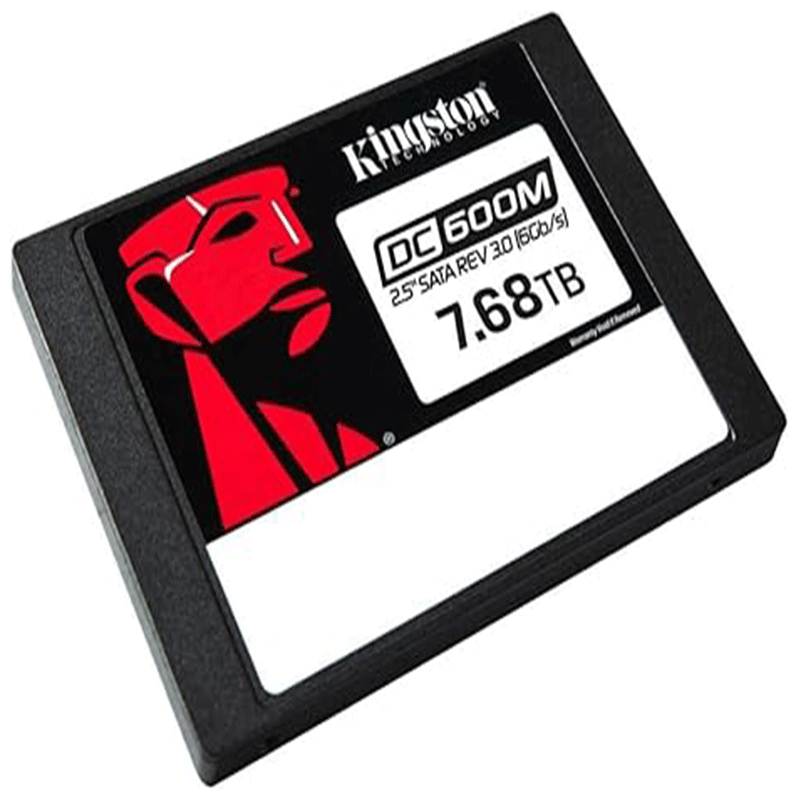
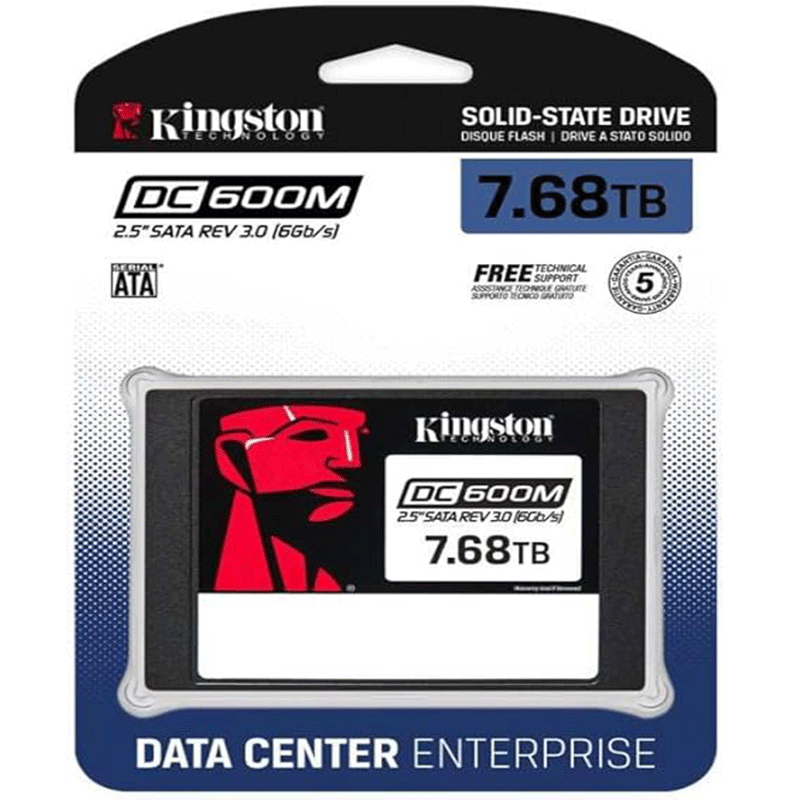
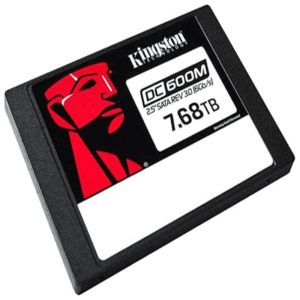
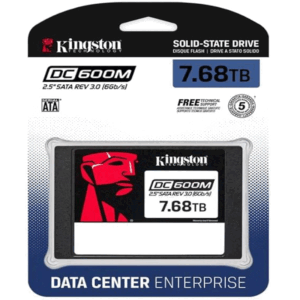
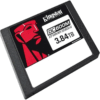
Kingston Enterprise 7680G DC600M (Mixed-Use) | 2.5″ SATA SSD | SEDC600M/7680G
Description Overview
A high-capacity (7.68 TB) enterprise-class 2.5″ SATA SSD designed for data-center and server use. It uses 3D TLC NAND with DRAM cache, supports SATA III (6 Gb/s), and delivers up to 560 MB/s read / 530 MB/s write. The drive includes hardware-based power-loss protection, offers consistent latency and IOPS for “mixed-use” workloads, and provides enterprise-grade endurance (about 14,016 TBW / 1 DWPD over 5 years) plus reliability features such as wear-leveling, SMART telemetry, and hot-plug capability.
Key Specs & Features
- Capacity: 7.68 TB
- Interface / Form Factor: 2.5″, SATA III (6 Gbps), backwards compatible with SATA II (3 Gbps)
- NAND: 3D TLC, with DRAM cache for better performance stability
- Sequential speeds: ~ 560 MB/s read and ~ 530 MB/s write
- Random IOPS (steady-state 4 K): ~ 94,000 read / 34,000 write
- QoS latency guarantee (99.999%): ~ 240 µs read / 170 µs write
- Endurance / Write Volume: 14,016 TBW over life; rated 1 DWPD (drive-writes per day) over 5 years (or ~1.66 DWPD over 3 years)
- Reliability: MTBF ~ 2 million hours, UBER (uncorrectable bit error rate) ≤ 1×10⁻¹⁷ — enterprise-grade reliability metrics.
- Dimensions: 69.9 mm × 100 mm × 7 mm
- Operating conditions: 0–70 °C operating; –40–85 °C storage.
- Power-loss protection: Hardware-based PLP (onboard capacitors)
- Power Consumption: Idle ~1.30 W; Avg ~1.45 W; Max read ~1.6 W; Max write ~3.6 W
- Weight: ~ 92.34 g
Key Features & Benefits
- Enterprise / data-center ready — engineered for mixed-use server workloads, virtual machines, databases, RAID storage, etc.
- Hardware-based power loss protection (PLP) — includes on-board capacitors to safeguard data in case of unexpected power failures.
- Consistent latency and IOPS — designed for stable, predictable performance, with Quality-of-Service (QoS) guarantees even under load.
- 3D-TLC NAND + DRAM cache — ensures good performance and endurance compared to typical consumer-grade SSDs.
- Wide capacity range — up to 7.68 TB, suitable for heavy storage demands or large-scale deployments.
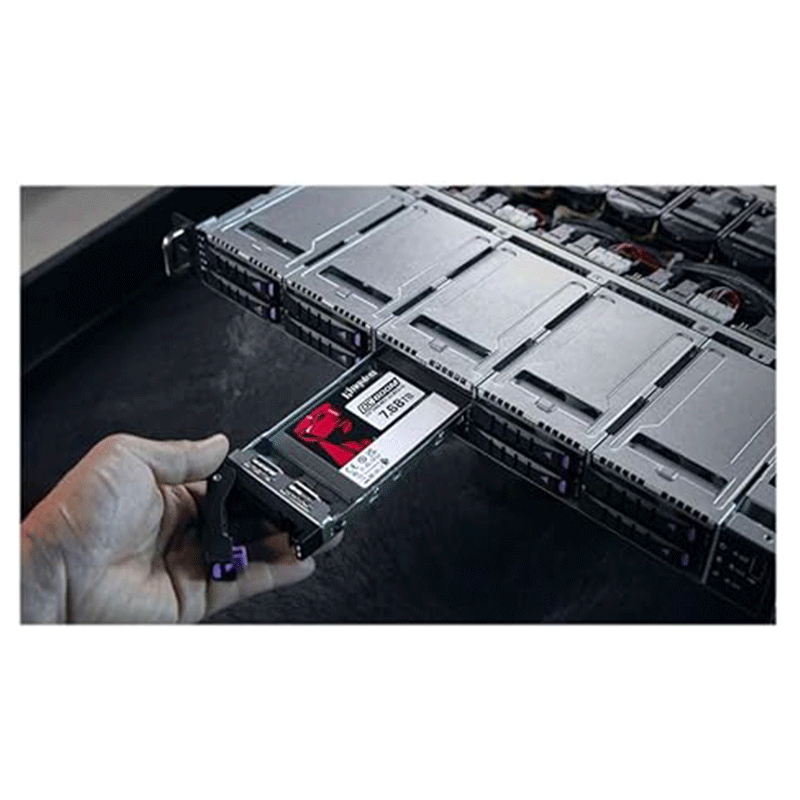
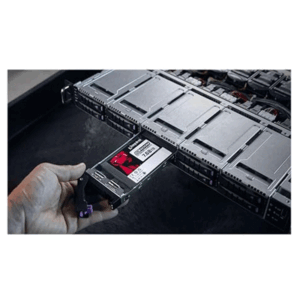
- Hot-plug support & enterprise SMART telemetry — makes it suitable for server environments; supports wear-leveling, monitoring of drive health, remaining life, temperature, etc.
- High endurance — rated for heavy write volumes (ideal for mixed-use workloads and long-term reliability) across its lifespan.
- Other: Hot-plug capable; wear-leveling; enterprise SMART telemetry & monitoring; suitable for server/data-center workloads (mixed-use).
What It’s Designed For (and What It Excels At)
This SSD isn’t really aimed at regular consumer-PC tasks. It’s designed for enterprise / data-center / server / mixed-use workloads. Good use cases include:
- Server storage (databases, file servers, virtual machines)
- RAID arrays or storage clusters needing high reliability and consistent I/O
- Applications requiring predictable latency and sustained IOPS (e.g. virtualization, web hosting, analytics)
- Replacing HDDs or lower-end SSDs where reliability and endurance matter
Thanks to its high endurance (14 PB total writes over life), good IOPS, and sustained performance under load, it’s a solid choice for read-heavy or mixed-read/write enterprise workloads.
What It’s Not Ideal For — and What to Keep in Mind
- For a typical consumer laptop or desktop: this is overkill. Its capacity and reliability are great — but you won’t benefit from the enterprise-level endurance or QoS guarantees in everyday use.
- It’s SATA (not NVMe), so while sequential speeds are solid, it doesn’t match the raw throughput or low-latency of modern NVMe SSDs.
- The version DC600M (as opposed to DC600ME) doesn’t list built-in hardware encryption by default (encryption / TCG-OPAL support is only on DC600ME).
- Cost per TB tends to be higher than consumer SSDs — you pay for reliability, endurance, and guaranteed service-level performance.
Is It a Good Choice for You?
- ✅ If you run servers, VMs, databases, or a storage-heavy system needing reliability and endurance — yes, it’s a very good enterprise-class choice.
- ✅ If you need large capacity SATA storage but also want better endurance than a “normal” SSD, this drives offers a good balance.
- ❌ If you’re building an everyday PC/Laptop for browsing, office work, games, etc., you’d probably be better off getting a consumer SATA or NVMe SSD — cheaper and better suited for that workload.


Reviews
There are no reviews yet.