Enterprise Servers
Mobile Workstation
Tower and Rack Workstation Series

DELL EMC PowerEdge Servers
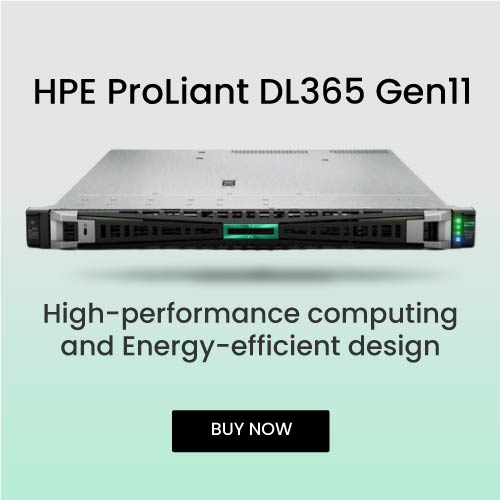
HPE ProLiant Servers

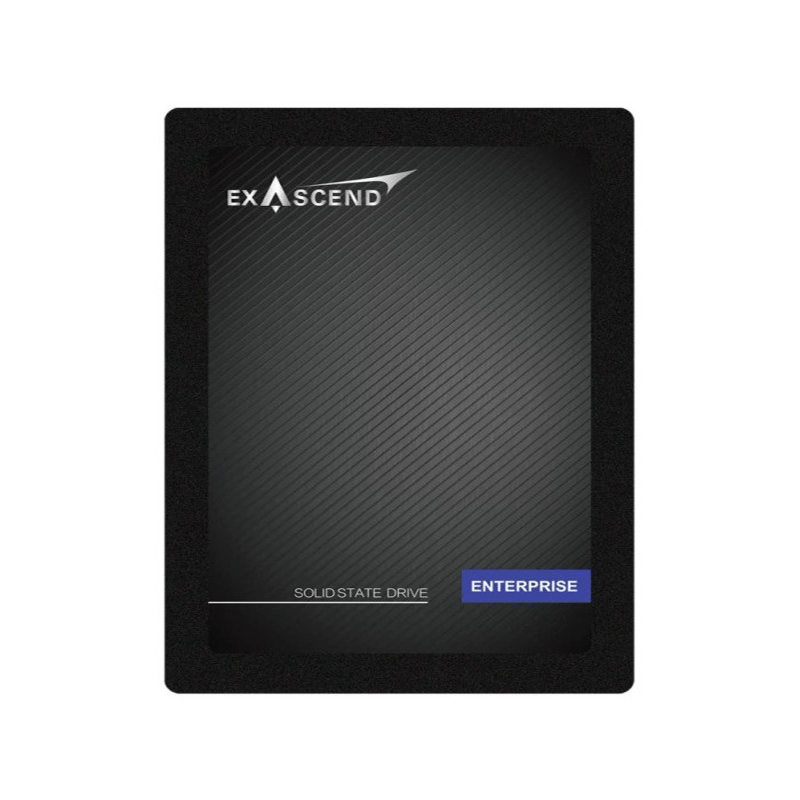
A high-capacity, enterprise-grade 2.5″ SATA-III SSD offering 7.68 TB of storage, optimized for NAS, servers, and data-center applications. It delivers strong sustained performance (up to ~555 MB/s read, ~530 MB/s write), reliable 4K random I/O (~96,000 IOPS read), and enterprise-level endurance with advanced error correction, wear-leveling, and power-loss protection — ideal for heavy workloads, caching, and storage-dense deployments.
Interface: SATA-III (6.0 Gb/s)
Form Factor: 2.5″ (7 mm)
Capacity: 7.68 TB (other SE4 variants range 240 GB – 15.36 TB)
Flash Type: 3D TLC NAND (with DRAM)
Max Sequential Read: up to 555 MB/s (some editions quoted up to 560 MB/s)
Max Sequential Write: up to 530 MB/s (some editions quoted up to 535 MB/s)
4K Random Read (IOPS): ~96,000 IOPS
4K Random Write (IOPS): ~18,000 – 46,000 IOPS (depending on “edition”)
Typical Latency (7.68 TB version): ~110 µs (read), ~40 µs (write) under steady-state workloads
Power Consumption: Active < 2.6–2.8 W; Idle < 0.8–0.9 W
Operating Temperature: 0 °C to 70 °C
Storage Temperature: –40 °C to 85 °C
Vibration (Operating): 10 G (peak, 10–2000 Hz)
Shock (Operating): 50 G (11 ms half-sine)
Shock (Non-Operating): 1500 G (0.5 ms half-sine)
MTBF (Mean Time Between Failures): 2,000,000 hours
Endurance (TBW / DWPD): Depending on edition — for SE4 the 5-year DWPD is ~0.6 (for some configs) or up to 1 (for other configs)
Data Protection / Reliability Features: LDPC error correction, firmware + hardware power-loss protection, wear-leveling, optional encryption (TCG Opal 2.01 / AES-256)
High capacity in a compact form-factor — At 7.68 TB (and with the series scaling up to 15.36 TB) the SE4 lets you pack a lot of storage into a standard 2.5″ (7 mm) slot, excellent for dense NAS pools or multi-drive storage arrays.
Consistent, reliable performance — With sustained sequential read/write up to ~560/535 MB/s and strong IOPS/latency for random reads/writes, it delivers much better responsiveness than HDDs or many consumer-grade SSDs, especially under heavy or mixed workloads.
Enterprise-class reliability & durability — Built for intensive workloads and long-term use: advanced error correction (ECC/LDPC), wear-leveling, power-loss protection (PLP), and overall design to handle 24/7 operation
Energy-efficient & thermally efficient — Compared to spinning disks, it uses less power (low active/idle power draw) and generates less heat, which is beneficial especially in multi-drive NAS enclosures or server racks.
Better reliability than HDDs in many respects — Because SSDs have no moving parts, they’re much less prone to mechanical failures, vibration/shock issues, or the wear-over-time problems that HDDs face.
Broad compatibility & deployment flexibility — The standard 2.5″ SATA-III form factor means it’s compatible with most NAS units, servers and legacy systems — no need for special NVMe slots or adapters.
Low power draw — efficient enough for multi-drive setups while minimizing heat and power consumption.
NAS / Home‐Server for Media / File Storage with Performance Needs
If you run a NAS for media streaming, file sharing, backups or general file storage — and you occasionally access or edit large files (e.g. video editing, photo libraries) — this SSD gives you much faster access, lower latency and better responsiveness than traditional HDDs.
Running Virtual Machines (VMs) or Containers on NAS / Server
For virtualization tasks, hosting VMs or container workloads on a NAS server often requires high IOPS and low latency. An enterprise-grade SATA SSD like this makes boot-up, OS responsiveness, and VM disk I/O much faster and more stable than HDD-based storage.
Database Storage / Applications with Frequent Random I/O
If you’re running databases, web applications, or other services that perform many small reads/writes or random I/O — the SSD’s fast response and consistent performance help ensure the application remains responsive and stable.
SSD Caching or Tiered Storage in Hybrid HDD/SSD NAS Setups
In a NAS configured with mostly HDDs for bulk storage, this SSD can serve as a caching tier (or “hot data” tier) — storing frequently accessed data or OS/apps — which speeds up access significantly while keeping overall storage costs and capacity high.
Workstations / Servers Requiring High Reliability, Low Noise & Low Power
Because SSDs (unlike HDDs) have no moving parts — they draw less power, generate less heat and noise — this SSD suits always-on servers/NAS or home-servers in noise-sensitive environments.
Mixed Workload Environments: Media + Virtualization + Databases
If you have a setup combining several tasks — e.g. media storage/streaming, VM hosting, occasional heavy I/O — using this SSD allows you to handle mixed workloads more reliably and efficiently than HDDs, with better endurance and performance consistency.
Enterprise-grade reliability and endurance — good for 24/7 operations, frequent read/write cycles, and heavy usage
Fast read/write speeds and high random I/O performance — ideal for workloads sensitive to latency or needing many I/O operations per second (e.g. VMs, databases).
Lower power consumption, less heat and silence — beneficial for home-server or always-on NAS use.
Flexibility: can be used as primary storage, cache, or part of a tiered storage architecture depending on your needs.
Reviews
There are no reviews yet.