Enterprise Servers
Mobile Workstation
Tower and Rack Workstation Series

DELL EMC PowerEdge Servers
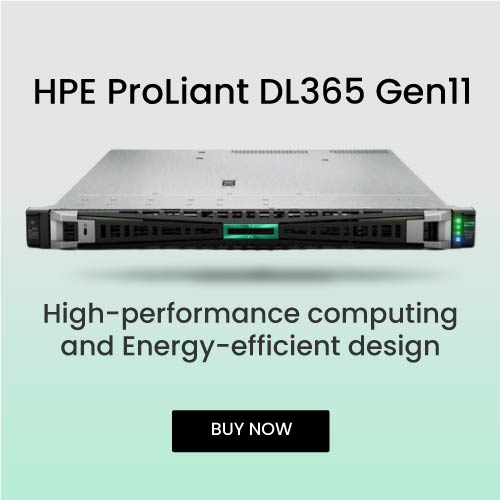
HPE ProLiant Servers

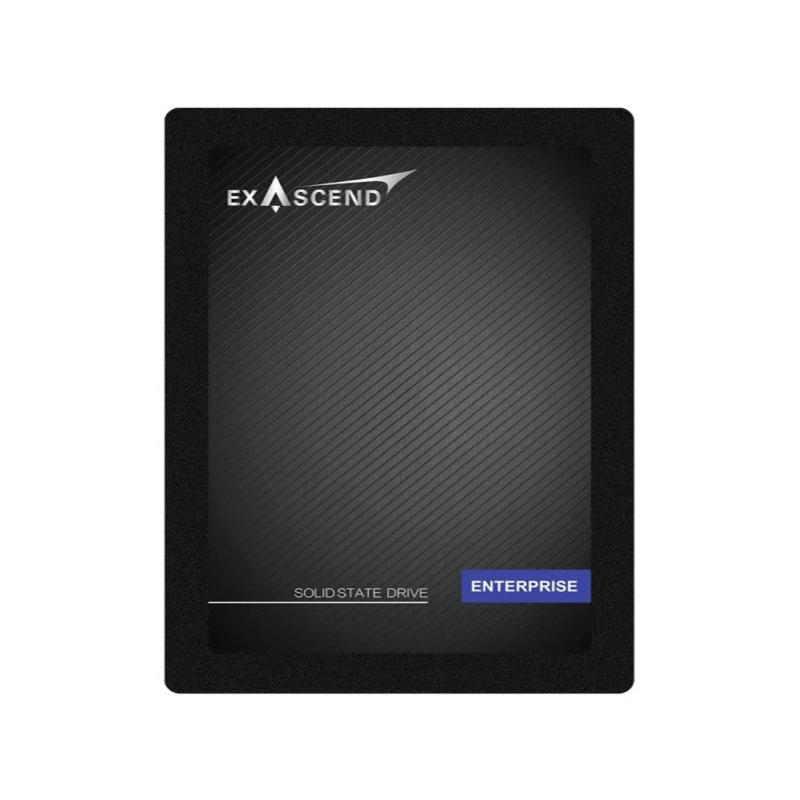
The Exascend PE4 U.2 15.36TB Enterprise SSD is a high-capacity solid‑state drive (SSD) designed for enterprise‑class storage: using nonvolatile NAND flash memory and a controller — rather than moving mechanical parts — the drive delivers fast, reliable storage in a compact form factor. It uses the U.2 form factor (a standardized 2.5″‑size connector and housing for enterprise SSDs) and connects via PCIe 4.0 / NVMe — enabling high‑bandwidth, low‑latency data transfer compared with traditional SATA / HDD solutions.
As an “enterprise SSD,” it’s built for servers, data centers, NAS systems, workstations, or any environment demanding large capacity, high performance, reliability, and endurance under heavy workloads. It provides high sequential read/write throughput (in the order of ~3,300–3,400 MB/s) and strong endurance / durability compared to consumer‑grade drives — making it suitable for intensive, continuous workloads rather than casual desktop use.
In short: this SSD is a solid‑state storage device that replaces traditional spinning disks for enterprise and data‑heavy environments — offering much faster data access, higher reliability, and very large storage capacity in a compact U.2 package.
High Capacity (15.36 TB) — offers very large storage in a single U.2 SSD, useful for consolidation, large datasets, VM storage, media, or backup in enterprise servers / NAS.
PCIe 4.0 (NVMe 1.4) Interface — modern, high-performance interface for fast data transfer.
Strong Sequential Performance — sequential read/write speeds up to ~ 3,465 MB/s read / ~ 3,340–3,355 MB/s write (depending on variant).
Good Random I/O Performance — 4K random read IOPS and 4K random write IOPS at levels suited for enterprise workloads (e.g. virtualization, databases).
Power‑Efficient / Low Power Consumption — active power draw stays under ~ 8–8.5 W, making it more efficient (less heat, lower power draw) than many HDD arrays — good for data centers or energy‑conscious deployments.
Enterprise‑Grade Reliability & Endurance
Built on 3D TLC NAND (176‑layer TLC in some cases) for storage density and durability.
Designed for server workloads — endurance and reliability features make it suitable for 24/7 operations.
Mean Time Between Failures (MTBF) and drive-write lifetime (DWPD / TBW) appropriate for enterprise use.
Data Protection & Security Features
Optional support for hardware encryption (AES‑256) and compliance with security standard TCG Opal 2.0 — useful for protecting sensitive data.
Advanced error correction (e.g. LDPC) and firmware/hardware‑based power‑loss protection to help protect data integrity even if power is lost unexpectedly.
Slim / Space‑Efficient Form Factor — U.2 format with a slim profile, which helps maximize storage density in rack‑mount servers or NAS boxes.
Optimized for Power / Thermal Efficiency — according to manufacturer info, it’s designed for lower power draw and efficient thermal handling, making it suitable for dense storage environments or power-constrained setups.
The Exascend PE4 U.2 15.36TB Enterprise SSD is designed for high-performance, high-capacity storage in enterprise environments. Its ideal use cases include:
Large-scale storage arrays requiring fast read/write speeds and high reliability.
Supports virtualization and multi-tenant cloud environments efficiently.
Application servers, database servers, and transaction-heavy workloads benefit from low-latency, high-throughput storage.
Suitable for mission-critical applications where downtime is costly.
Compute clusters for simulations, AI/ML training, or data analytics that need rapid access to large datasets.
Centralized storage solutions for businesses that require fast access and large capacity.
Ideal for file sharing, backups, and archival in enterprise environments.
Video editing, rendering farms, and media production environments that handle multi-terabyte files.
Reduces bottlenecks during high-resolution video editing and transcoding.
Long-term storage and rapid recovery systems that need high endurance and data integrity.
Supports redundant storage architectures without sacrificing performance.
Acts as a fast cache layer in hybrid storage setups to accelerate slower HDDs.
Useful in database caching, virtual desktop infrastructure (VDI), and big data pipelines.

Reviews
There are no reviews yet.